CASE STUDY / Purchasing
CheapGPT
Price discovery, built around what I need.
A Need-based price discovery app, shaped by real purchasing work—and an evolving experiment in making conversation the interface.
- Requirements before listings
- Need-first
- Adviser and interaction layer
- ChatGPT
- Pilot in active use
- 1 practice
Observe
Finding a deal was only part of the problem.
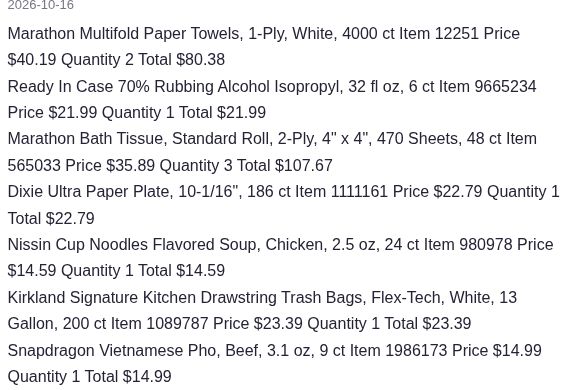
Running the business side of a dental practice, I found purchase history scattered across emails, invoices, and retailer accounts. Different package sizes, tax, shipping, and discounts made prices hard to compare.
When I had time to browse and compare sellers, I could sometimes bring costs down. But hunting for deals took time. Buying more ahead of time could help, yet it required storage space—and I did not have a clear picture of how quickly we used each supply.
When we ran out, the choice narrowed: buy what was available, sometimes at a high price. Better planning could avoid those urgent purchases. I needed to connect prices, stock, and consumption, so I could judge both a good deal and the right time to buy.
Understand
A product listing is not the same as a need.
I made the recurring Need the starting point. “Surgical masks” persists even when the seller, brand, or packaging changes. Sub-Needs keep distinctions such as glove size explicit.
Three decisions shaped the product:
- Compare delivered unit cost. One mask order was 40 boxes × 50 masks: 2,000 masks for $209.61, or about $0.105 each.
- Keep evidence attached. Confirmations, shipments, and refunds may describe the same transaction. A new email must not automatically become a new purchase.
- Separate purchases from stock. An order records what was bought; a physical count establishes what is on hand. Tracking is optional.
Build
From evidence-matching forms to a purchasing conversation.
What I built
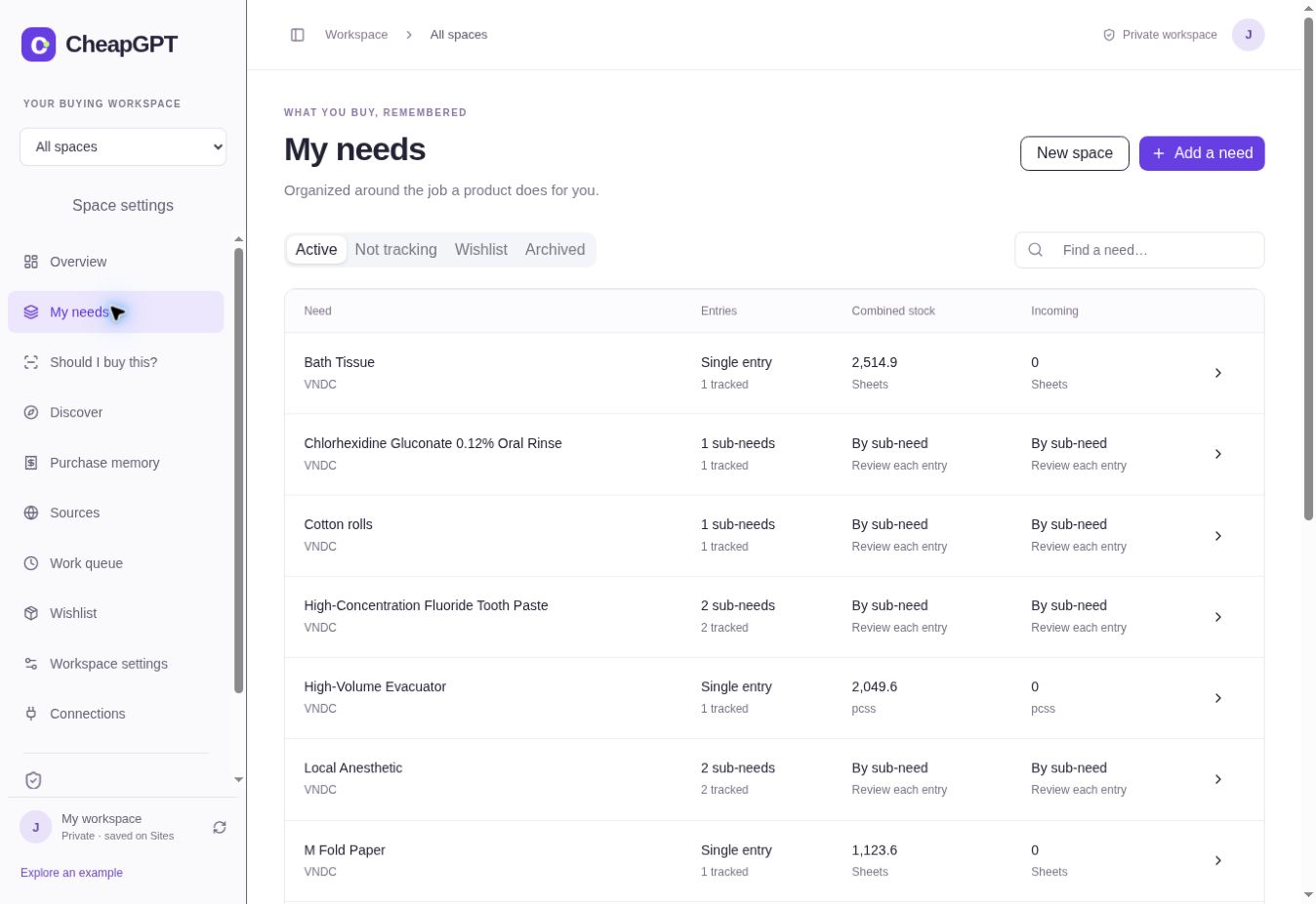
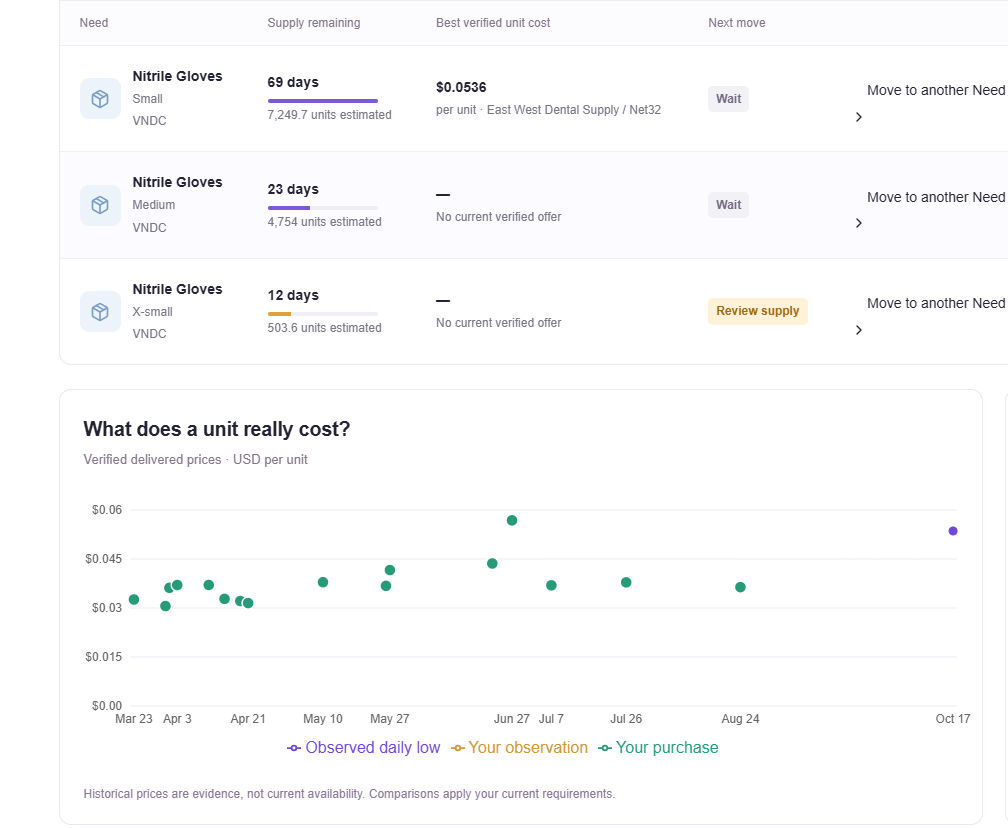
A Need-based price discovery app that keeps requirements, purchase history, stock counts, and market observations together. A unit-price chart compares current discoveries with previous purchases.
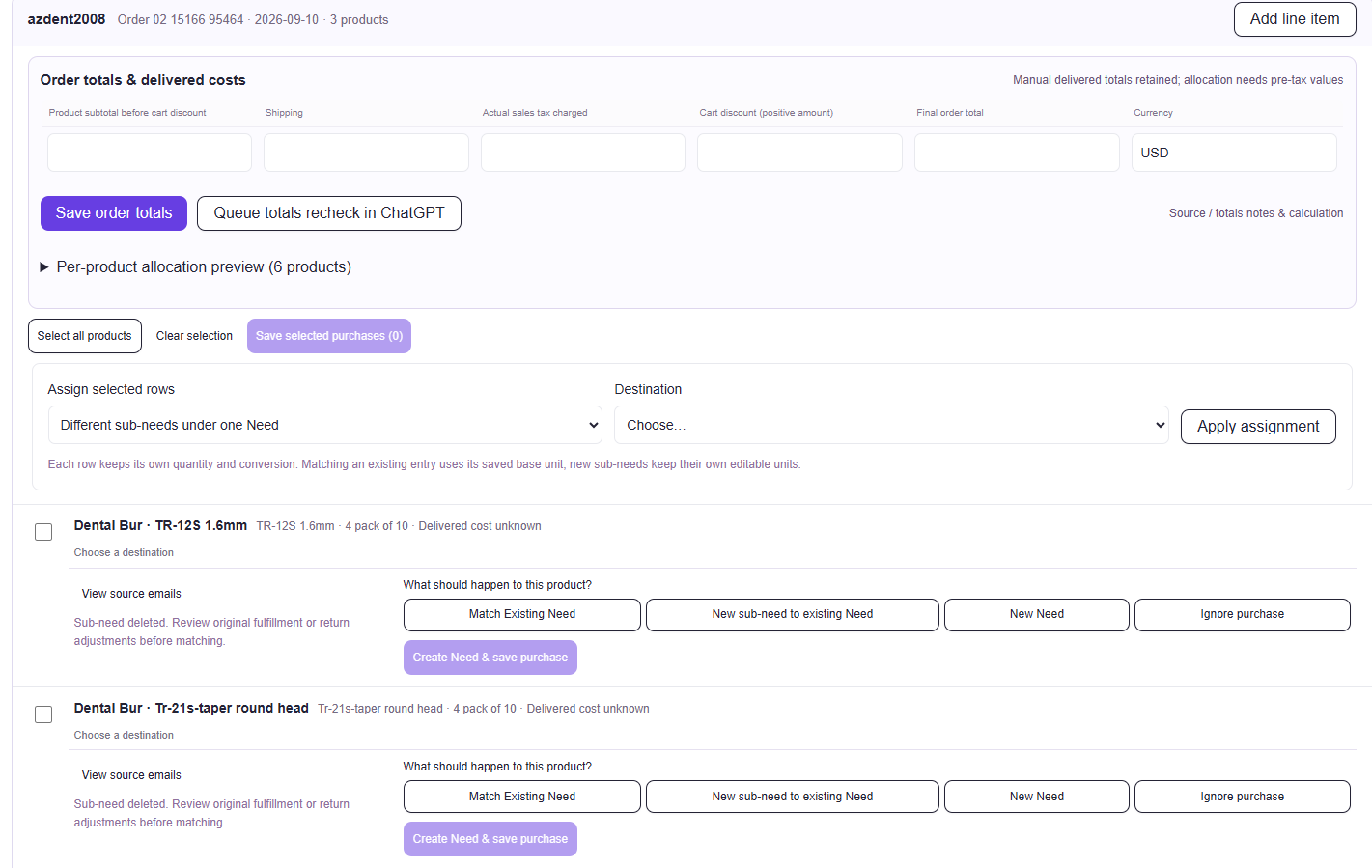
The first review UI exposed four choices for each email line: match an existing Need, add a sub-Need, create a Need, or ignore it. Multi-item orders needed separate decisions while preserving quantities and order costs.
How it evolved
I defined the purchasing logic and review rules, used AI-assisted development, and tested against real records. Missing quantities, duplicate evidence, and undoing a match all needed explicit handling.
Every exception added another selector or field. I gradually moved interpretation into ChatGPT: I could explain a decision in context, resolve ambiguity, and apply it to the right records. CheapGPT keeps the durable data and rules; purchasing and suitability decisions remain mine.
Learnings
Conversation can simplify the interface. Reliable records make it possible.
For this messy, context-heavy work, the chatbot is becoming my best interface. I increasingly think of a “no UI” era: describe the intent directly instead of translating it into a sequence of form actions. The price chart still earns its place because it makes a comparison visible.
In one dental practice, it helps me spend less time hunting for deals by bringing purchase history and current offers together. An initial audit models $2,000–$4,000 in potential annual purchasing savings from better prices and fewer expensive urgent purchases. Continued use will show how much of that opportunity becomes actual savings.
Flexible interaction still depends on consistent units, traceable evidence, and corrections the system preserves. Next, I want to test three things:
- Actual savings: track comparable delivered costs, urgent purchases, and time spent—including maintaining records—to see whether the benefits persist.
- Interest from other SMEs: will another small business try the system and find enough value to keep using it?
- A workable way to gather data: can I make purchase history easy to collect and keep current without my hands-on setup, using a level of access each user is comfortable granting?
My hypothesis is specific to this workflow. Conversation should remove work, while visual evidence helps me judge the answer.